

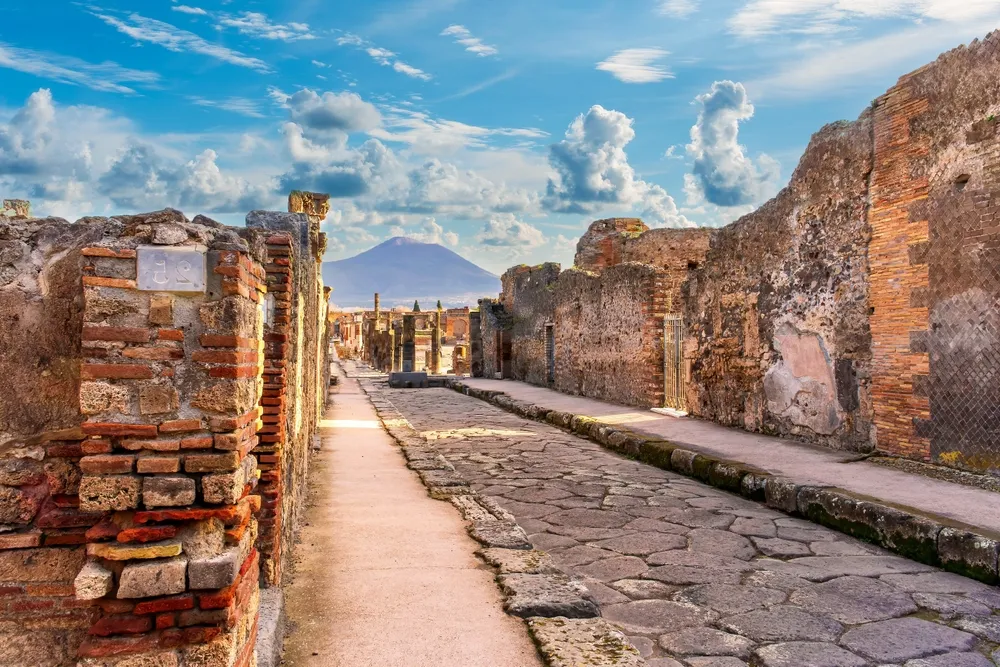
If you’re planning your first trip to Italy and the words ‘Rome to Pompeii day trip’ keep appearing in your research, you’re on the right track. This is one of the most popular and rewarding day trips in all of Europe — and for good reason. But I’ll be upfront with you: the first time I planned this journey independently, I underestimated it. The logistics look simple on paper until you’re navigating a busy Neapolitan train station, switching lines, and wondering which Pompeii station is actually next to the ruins.
After over a decade of researching and writing about Italian travel, this guide is the one I wish I’d had at the beginning. Let’s get into every transportation option, the real costs involved, and how to structure your day so you’re not exhausted by 2:00 PM.
Getting from Rome to Pompeii — All Your Transportation Options
By High-Speed Train — The Fastest Independent Route
The quickest way to get from Rome to Pompeii independently is the high-speed Frecciarossa or Frecciabianca train from Roma Termini to Napoli Centrale. The journey takes approximately 70 minutes and trains run 2–3 times per hour throughout the day, starting from around 6:00 AM. Book in advance through Trenitalia or Italo (Italy’s two competing high-speed rail operators) — early-bird prices can be as low as €19.90 each way.
From Napoli Centrale, you then transfer to the Circumvesuviana regional line toward Sorrento. The Circumvesuviana station is co-located with Napoli Centrale (look for Napoli Garibaldi, connected by a walkway — it’s well signposted). The journey to Pompei Scavi – Villa dei Misteri station takes around 35–40 minutes, and trains run every 30 minutes. The fare is approximately €3.20 each way. Walk out of the station and the main entrance to the ruins is right across the road, about 100 metres to your right.
Important note: do not confuse Pompei Scavi – Villa dei Misteri with the separate mainline Trenitalia Pompei station, which serves the modern town and requires a longer walk to the ruins. The Circumvesuviana station is the one you want.
By Guided Coach Tour — The Low-Stress Option
If train changes and logistical juggling aren’t your idea of a relaxing day, a guided coach tour from Rome is a genuinely excellent alternative. The typical itinerary has you departing from a central Rome meeting point (usually near Roma Termini, Piazza del Popolo, or Via di Villa Ruffo) at around 7:00–7:30 AM in an air-conditioned coach, arriving at Pompeii around 10:00–10:30 AM, exploring for 2–4 hours with a guide, then returning to Rome by early evening (typically 6:00–8:00 PM).
Most day trip packages include round-trip transport, skip-the-line Pompeii entry, and an English-speaking guide. Some tours also offer extensions to Mount Vesuvius, a stop in Sorrento, or lunch at a local trattoria. The total door-to-door day typically runs 11–13 hours. It’s a long day, but a well-managed one.
By Private Car or Driver — The Flexible Choice
For families, couples, or small groups who want maximum flexibility, hiring a private driver or renting a car is a compelling option. The drive from Rome follows the A1 and A3 motorways and takes approximately 2.5 hours in normal traffic (allow 3 hours during peak season). There are several car parks near the Pompeii ruins, with a going rate of around €10 per day — attendants are usually easy to find near the main entrance.
Private driver services typically meet you at your Rome hotel, take you directly to Pompeii (and onward to any other stops you want), and wait or return for pick-up at an agreed time. For a group of 4+, the per-person cost becomes quite competitive with guided group tours, and you gain full control over your itinerary.
Planning Your Day — Timings, Costs & Key Logistics
This section is the one to screenshot before you travel.
First-Time Visitor Checklist
Book high-speed train tickets in advance (at least 1–2 weeks for summer travel) — prices rise significantly closer to the date.
Pre-book Pompeii entrance tickets online to bypass ticket queues of up to 120 minutes in peak season. Since late 2024, tickets are nominative and the site has a 20,000 daily visitor cap.
Depart Rome no later than 8:00 AM — earlier if possible. Arriving at Pompeii before 10:30 AM makes a meaningful difference to crowd levels.
Plan a minimum of 3–4 hours at the site. Two hours covers the highlights but feels rushed; most first-time visitors want more time than they budgeted.
What to Expect at Pompeii — Site Orientation for First-Timers
The Main Entrance and First Impressions
Most visitors enter through Porta Marina, the main gate closest to the Pompei Scavi station. Before entering, orient yourself with a site map — available at the entrance or downloadable in advance. The site covers 44 acres with over 170 acres of preserved Roman urban fabric, so even after hours of walking, you won’t have seen everything.
The Forum is typically the first major stop and the logical starting point. From there, the ancient city unfolds in a rough grid: streets lined with stepping stones (to keep feet dry in Roman times), bakeries, wine bars, temples, and private homes with their frescoed interiors still intact. The Forum Baths, the House of the Faun, the Lupanar (the ancient brothel), and the amphitheatre are among the unmissable stops.
The Amphitheatre — Pompeii’s Most Underrated Sight
Located at the far eastern end of the site, Pompeii’s amphitheatre is often missed by visitors who run out of time or energy. That’s a shame, because it’s extraordinary — the oldest surviving stone Roman amphitheatre in existence, predating the Colosseum in Rome by over a century. It held around 11,000 spectators and is remarkably well-preserved, thanks to the same volcanic ash that buried the city. You can walk the perimeter and step inside to experience the scale from ground level. It’s also usually less crowded than the Forum, making it one of the site’s best spots for a quiet moment of reflection.
Practical Tips for Navigating the Site
Pompeii’s ancient basalt cobblestones are uneven and tiring underfoot — wear proper walking shoes. In summer, the site offers minimal shade outside the covered structures and villas; bring a hat, sunscreen, and at least a litre of water. The drinkable fountains inside the site are a welcome discovery, but don’t rely on them as your sole water source.
Dining options inside and immediately around the archaeological site are limited in quality and overpriced. A better strategy is to eat before you enter the site, or factor in a proper sit-down lunch in the town of Pompei (the modern town surrounding the ruins) or, if your tour includes it, in Naples or Sorrento.
Making the Most of Your Time — Smart Itinerary Tips
The Rome to Pompeii Day Trip by the Numbers
Rome guided tour to Pompeii day trip typically starts between 7:00–7:30 AM from central Rome. High-speed train travel time from Roma Termini to Napoli Centrale is approximately 70 minutes. Transfer time via Circumvesuviana from Naples to Pompeii is approximately 35–40 minutes. Recommended time at Pompeii site: 3–4 hours. Return travel time to Rome: approximately 2–2.5 hours. Estimated return to Rome: 6:00–8:00 PM.
Should You Add Mount Vesuvius or Herculaneum?
Many first-time visitors ask whether they can squeeze Vesuvius or Herculaneum into the same day as Pompeii from Rome. The honest answer is: only if you’re comfortable with a very full, long day and are happy to see both things briefly rather than deeply.
Herculaneum (a 20-minute ride back toward Naples on the Circumvesuviana) is a smaller, arguably better-preserved site that can be explored in 2 hours. It’s a genuinely worthwhile add-on for travellers with an extra hour or two. Mount Vesuvius requires a separate bus from Pompeii to the Vesuvius park, then a short but steep hike to the crater rim. The views over the Bay of Naples are spectacular, but it adds at least 2 hours to your day.
If this is your first time and you want to actually enjoy Pompeii rather than rush it, I’d suggest keeping the day focused. Save Vesuvius or Herculaneum for a Naples-based base if you can manage it.
Guided Tour vs. Independent Travel — The Honest Trade-Off
I’ve done this journey both ways, and here’s my genuine take: independent travel by high-speed train is faster, more flexible, and cheaper for experienced travellers who are comfortable navigating Italian train stations. A guided day trip from Rome to Pompeii costs more but eliminates every logistical variable — transfer coordination, ticket queues, on-site navigation — and adds expert commentary that significantly deepens the experience of the site.
For first-time visitors to Italy, especially those on tight schedules or travelling with family, the guided tour option is almost always the right call. The cost difference is modest, the time savings are real, and having someone who knows the ruins guide you through them is simply a better experience. Whichever route you choose, just make sure you book in advance — for both transport and site entry. Pompeii is one of Italy’s most visited sites for very good reason, and the queues for unprepared visitors are brutal.
Conclusion
A Rome to Pompeii day trip rewards a little planning with an unforgettable experience. Whether you choose to navigate the trains independently or let a well-organised tour handle the logistics, the destination is more than worth the journey. Stand in the Forum, look up at Vesuvius, and remind yourself you’re standing in a city that has been frozen in time for nearly two thousand years. Very few places on earth can offer that.