Things to Do in Pompeii

Pompeii is a whole Roman city you can walk through. This guide covers the top sights and the best way to see them.

What to See in Pompeii

Pompeii spans about 163 acres buried under volcanic ash since the 79 AD eruption of Mount Vesuvius, and with only a couple of hours most visitors focus on six highlights, the Forum, the House of the Faun, the Villa of the Mysteries, the Amphitheatre, the Lupanar, and the bath houses, which together capture both the grandeur and the everyday life of the ancient city.

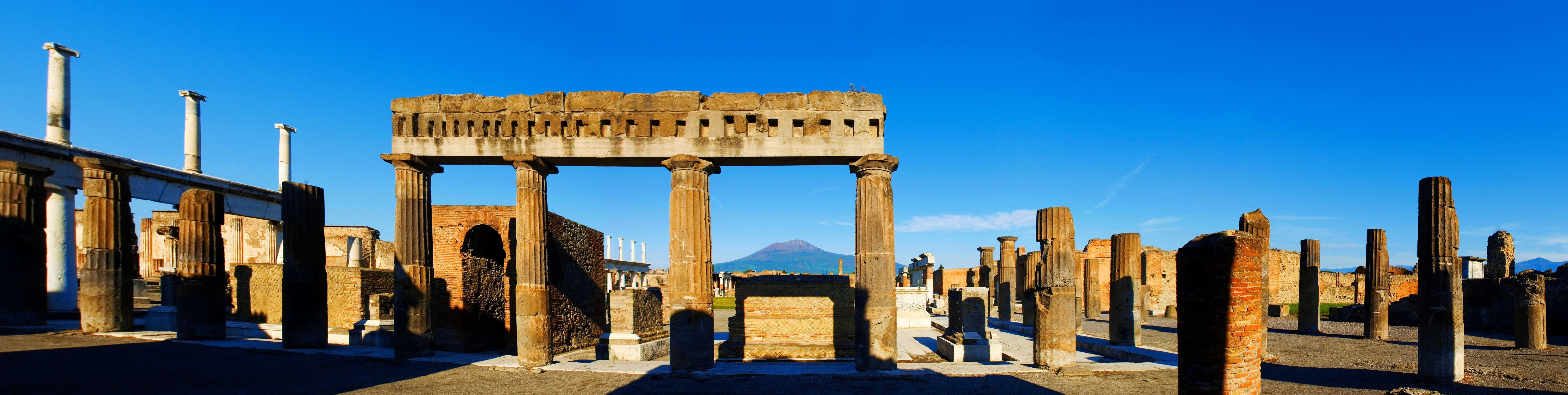
The Forum of Pompeii with columns and Mount Vesuvius

The Forum

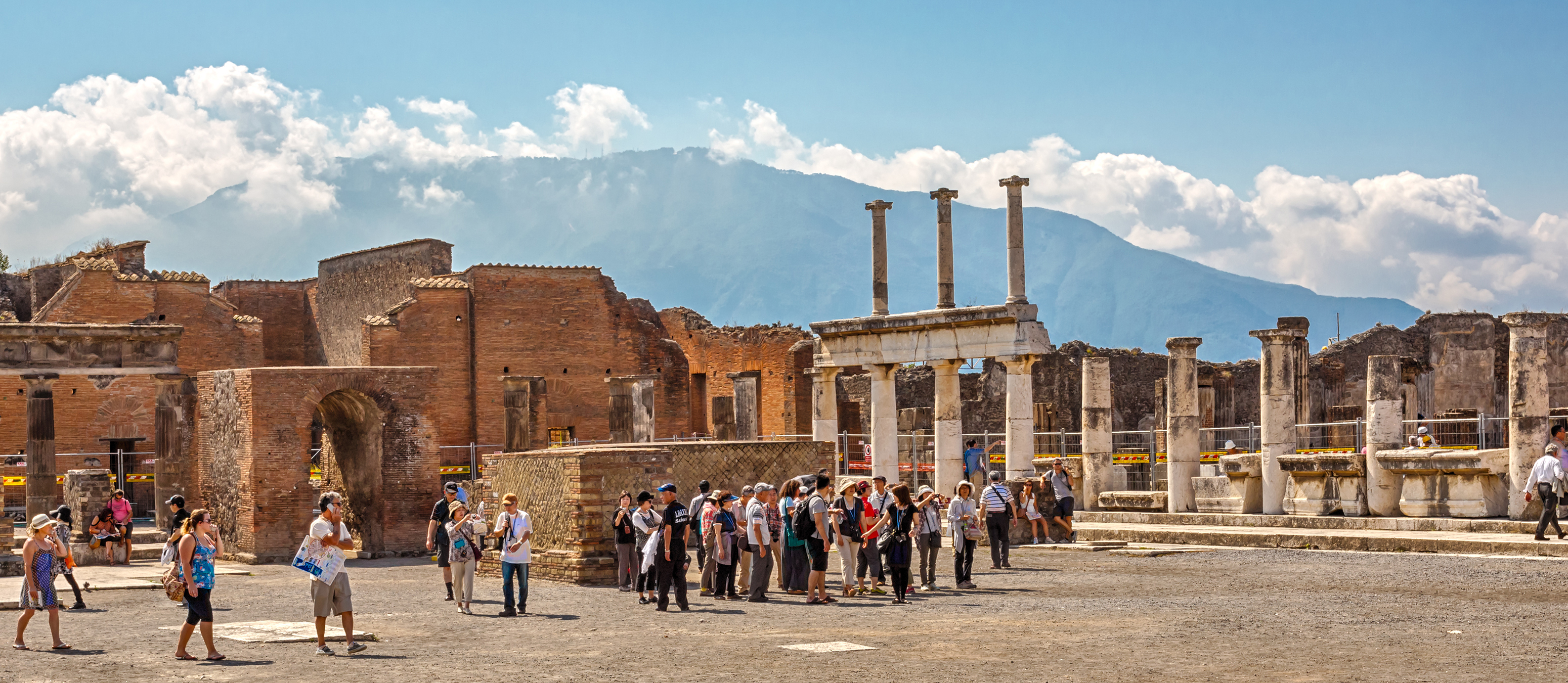
This was Pompeii's main square and the heart of public life. Temples, markets, and government buildings once stood around it, and crowds gathered here each day for business and worship. Today it is the city's most photographed spot, with rows of broken columns drawing your eye toward Mount Vesuvius in the distance. Stand at the open end and you get a sense of how grand the city once was.

Bronze faun statue in the House of the Faun, Pompeii

House of the Faun

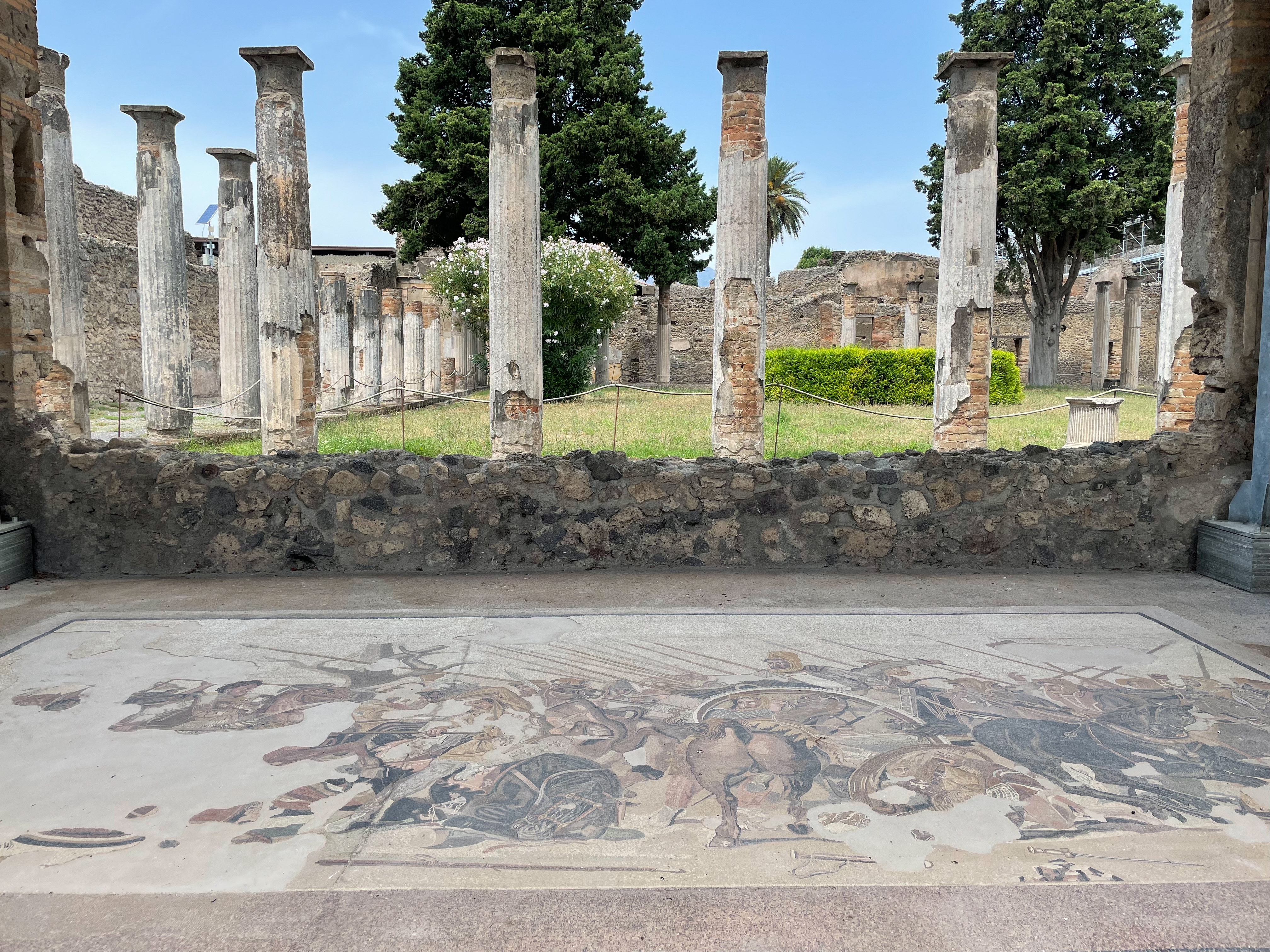
This is one of the largest and grandest homes in Pompeii, named for the bronze faun statue in its courtyard. It once filled a whole city block and showed off the wealth of its owners. The famous Alexander Mosaic was found here, picturing a battle between Alexander the Great and the Persian king. The original now sits in the Naples museum, and a copy remains on site.

Red frescoes in the Villa of the Mysteries

Villa of the Mysteries

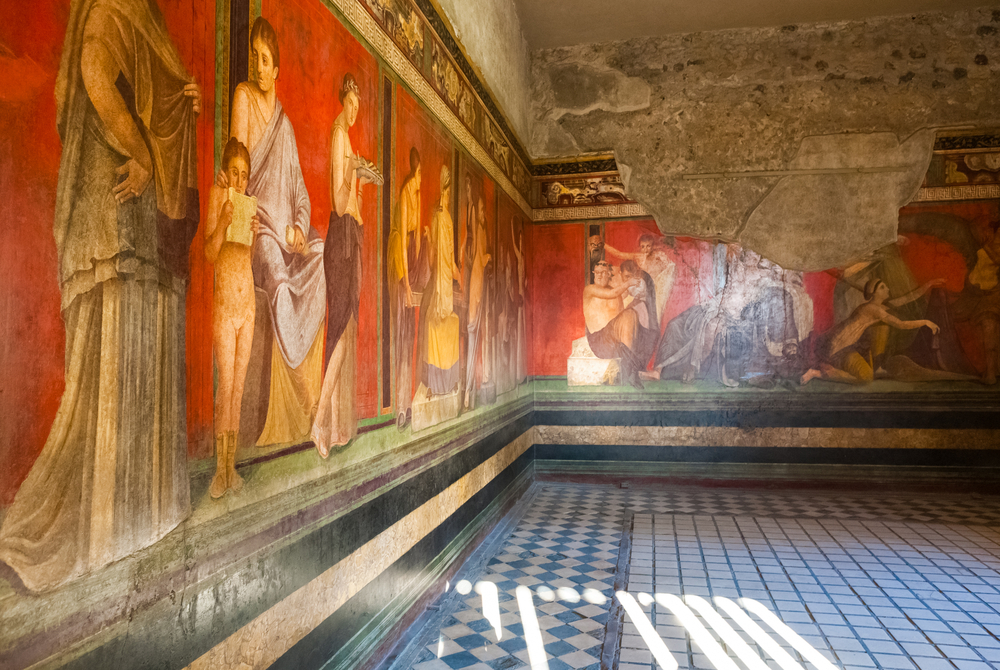
This grand villa sits outside the old city walls, a short walk from the modern entrance. It is famous for one room lined with red wall paintings, thought to show a young woman being initiated into the cult of Dionysus. The scenes are detailed, and the deep red color is still rich after almost 2,000 years. It is one of the best-preserved fresco cycles in the Roman world.

The ancient amphitheatre of Pompeii

The Amphitheatre

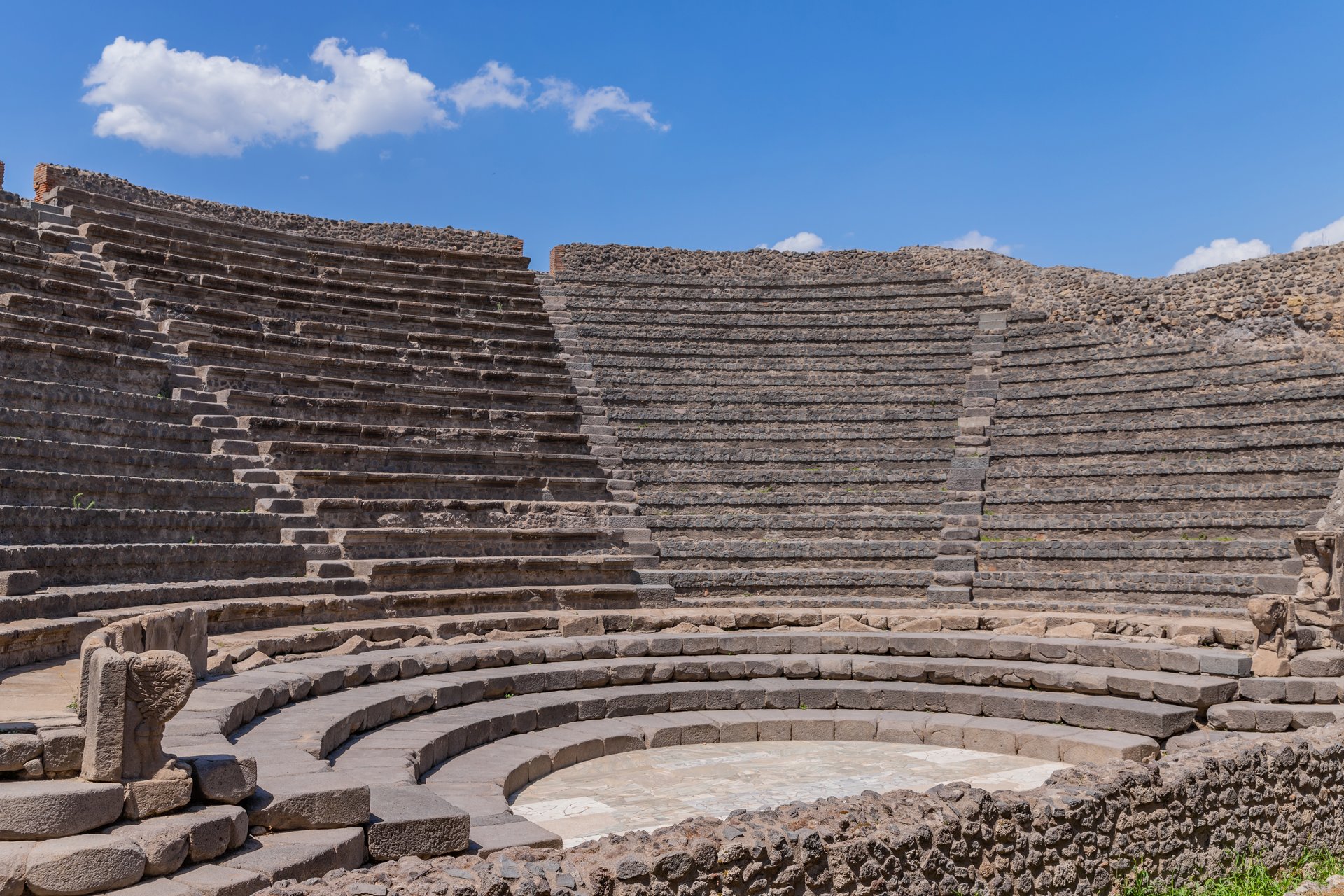
Built around 70 BC, this is the oldest surviving Roman stone amphitheatre in the world. It could hold about 20,000 people, who packed the stone tiers to watch gladiator fights and public games. Unlike later arenas, it has no underground chambers, so the action all took place on the open floor. A famous fresco even records a riot that broke out here between rival towns in 59 AD.

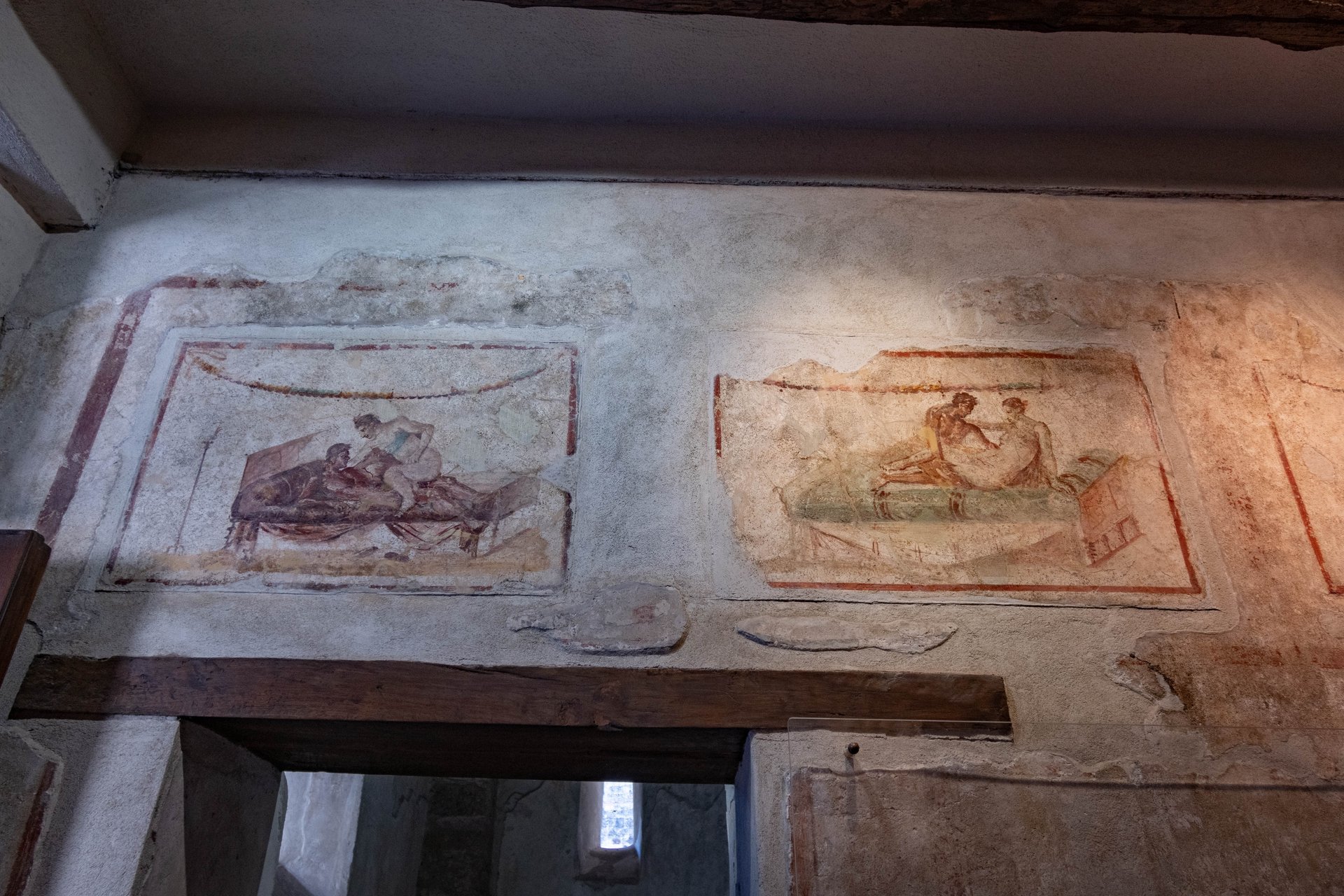
Interior of the Lupanar in Pompeii

The Lupanar

This small two-floor building was Pompeii's best-known brothel, and one of the few buildings made just for that trade. Inside you will find narrow rooms with built-in stone beds, along with frank wall paintings above the doors. Some scholars think the pictures worked like a menu for visitors. Crude as it is, the Lupanar gives an honest and human look at daily life in a Roman town.

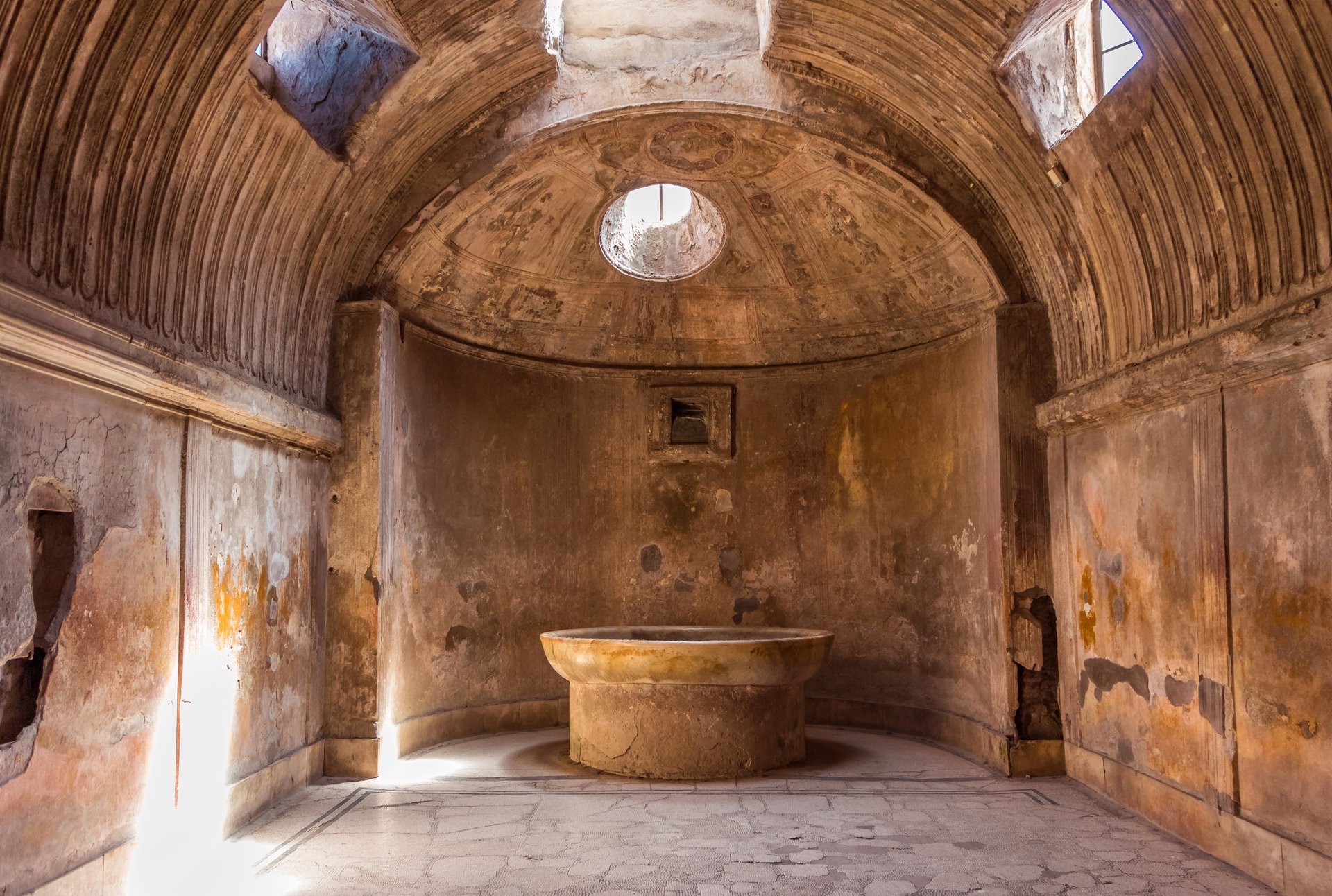
Roman bath house interior at Pompeii

The Bath Houses

Romans treated bathing as a social event, and Pompeii's Forum and Stabian Baths show exactly how it worked. Visitors moved through a changing room, then warm and hot pools, and finished with a cold plunge. Hot air flowed under the raised floors and through the walls to heat the rooms. Look up and you will still see carved stucco, painted ceilings, and tiny details that survived the eruption.

Explore Pompeii by Theme
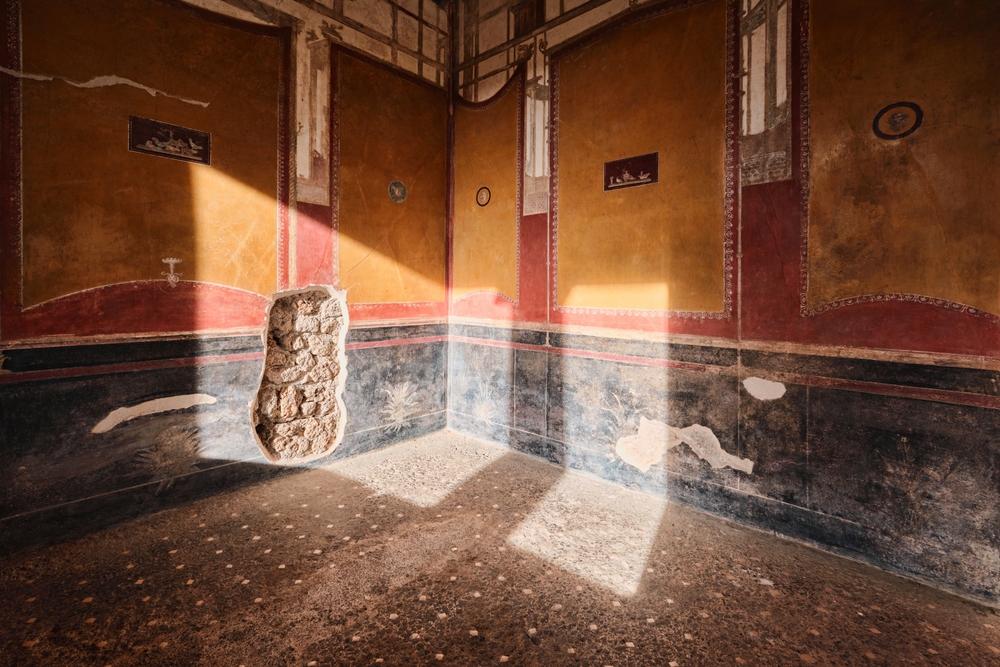
Frescoes and garden courtyard in the House of the Vettii, Pompeii

Inside Pompeii's Homes

Pompeii's homes range from small apartments to grand mansions. Step into the House of the Vettii and the House of the Tragic Poet to see bright frescoes, peaceful garden courtyards, and detailed floor mosaics, including the famous "Beware of Dog" design set into the entrance.

Stone-paved street with crossing stones in Pompeii

Life on the Streets

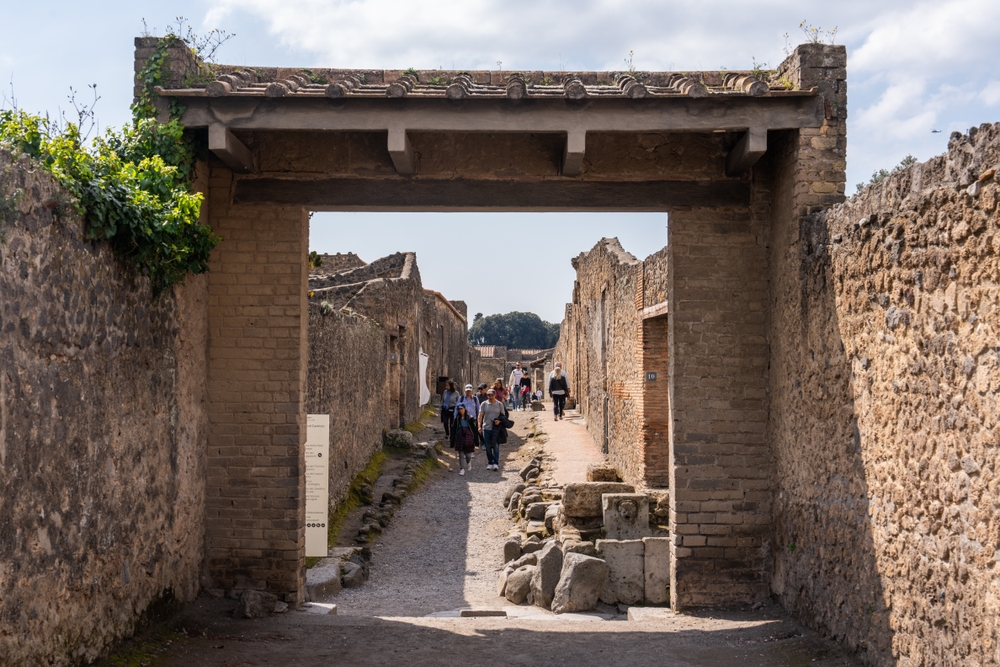
Pompeii's streets still feel alive. Walk the stone-paved roads and you will spot raised crossing stones, deep grooves worn by cart wheels, and counters where Romans once bought hot food. There is even a working bakery, complete with millstones and a brick oven much like ones we use today.

Colorful Roman fresco on a wall in Pompeii

Frescoes & Mosaics

Pompeii is an open museum of Roman art. Many walls still carry their original frescoes, painted in deep reds, blues, and golds, alongside floor mosaics made from thousands of tiny tiles. These everyday decorations survived the eruption almost untouched, giving us one of the richest records of ancient painting anywhere.

Frequently Asked Questions

What are the must-see sights in Pompeii?

Most visitors put the Forum, the House of the Faun, the Villa of the Mysteries, the Amphitheatre, the Lupanar, and the bath houses at the top of the list.

How big is Pompeii?

It is large, covering about 163 acres, and roughly two-thirds has been uncovered. It is best to pick a few highlights or set aside a full day.

Can you go inside the houses?

Yes, many homes and villas are open to walk through, though a few close at times for repairs. Inside, you can still see frescoes and mosaics on the walls.

Are the plaster casts real bodies?

The casts were created by filling the voids left by victims in the ash, and some still contain the original bones, making them incredibly moving to witness.

What is the House of the Faun?

It is one of Pompeii's largest homes, named for its bronze faun statue and famous for the Alexander Mosaic, whose original now sits in Naples.

How much fits in two hours?

Two hours is enough for the main sights. You can take in the Forum, a couple of houses, and the amphitheatre if you follow a route or a guide.